Why the risk falls. The three books don't fail at the same time. Seed claims come early and in clusters; late-stage employees and GP carry fail less often and exit sooner, so their premiums and proceeds pay claims while the seed book matures. A seed-only pool has to hold cash against its worst years by itself. Blended, those years are cushioned by members whose good years come earlier.
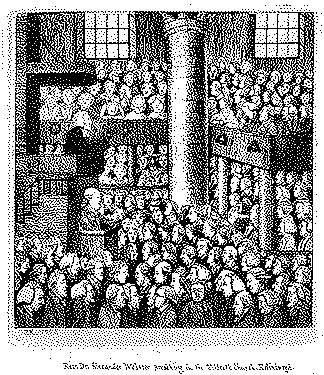
1744 · Edinburgh
The Scottish Ministers' Widows' Fund
When a Church of Scotland minister died, his widow and children were often left with almost nothing. Two Edinburgh ministers, Robert Wallace and Alexander Webster, proposed that every minister pay a modest annual premium into one fund that would pay a pension to any widow it left behind. Webster collected data on ministers' deaths and the families they left; Wallace priced the premiums from a life table; the mathematician Colin Maclaurin checked their sums.
The pooling is what made the widows better off. The premiums of ministers who left no widow went toward the pensions of those who did, and they were invested rather than simply passed through, so a widow could draw far more than her husband had ever paid in. The sums held, too: by one well-known account, the founders' forecast of the fund's capital in 1765 was out by a single pound.1 It was still paying out two and a half centuries later.
The lesson for usAlone, a minister's modest savings would have left his widow little. Pooled with hundreds of others and invested, the same premiums paid her a pension that left her far better off. And it's survived 250 years of crises.